
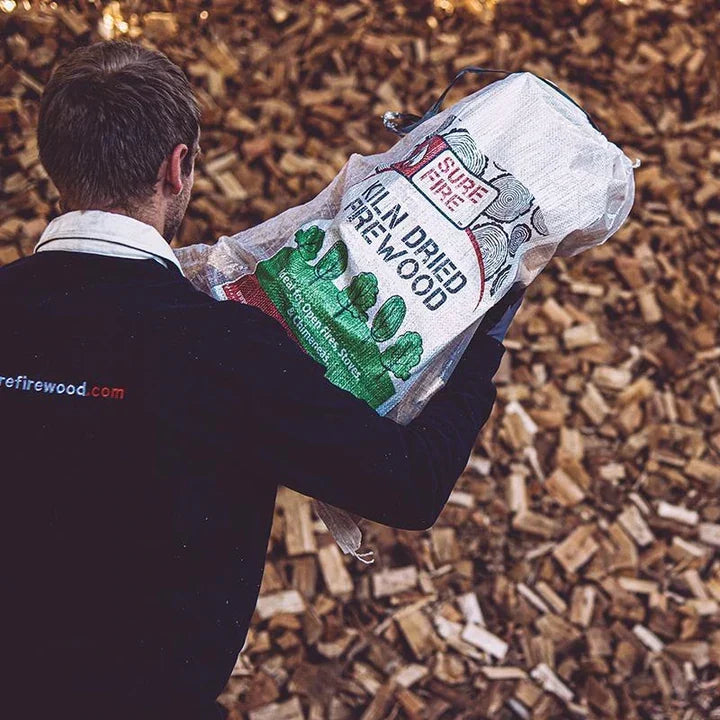
How Much Firewood Do I Need? The Complete Guide to Calculating Your Winter Firewood Requirements
How Much Firewood Do I Need?
One of the most common questions we're asked every autumn is:
"How much firewood should I buy for winter?"
Unfortunately, there isn't a one-size-fits-all answer.
The amount of firewood your household uses depends on several factors, including the size of your home, the type of stove you own, how often you burn logs and how well your property is insulated.
At Surefire Wood, we've supplied premium kiln dried firewood to homeowners throughout Ireland and the United Kingdom for decades. As Ireland's leading producer and one of Europe's largest producers of kiln dried firewood, we've helped everyone from occasional weekend users to customers who rely on wood as their primary heating source.
This guide explains how to estimate your firewood requirements, avoid overbuying or underbuying, and ensure you always have enough fuel to keep your home warm throughout the colder months.
Quick Answer
The amount of firewood you'll need depends on how frequently you use your stove.
As a general guide:
| Usage | Typical Requirement |
|---|---|
| Occasional weekend fires | 0.5–1 cubic metre |
| Evenings only | 1–2 cubic metres |
| Daily use | 2–4 cubic metres |
| Primary heat source | 4–8+ cubic metres |
These figures are only a guide, but they provide a useful starting point for most households.
The Five Biggest Factors That Affect Firewood Usage
No two households burn exactly the same amount of firewood.
The biggest influences are:
1. How Often You Use Your Stove
Someone lighting a fire on Saturday evenings will use a fraction of the firewood required by a family heating their home every day.
2. Property Size
Larger homes naturally require more heat.
A small cottage may only require one stove.
A large detached property may have several.
3. Home Insulation
Modern, well-insulated homes retain heat far more effectively than older properties.
Improved insulation often reduces annual firewood consumption significantly.
4. Stove Efficiency
Modern DEFRA-approved and Ecodesign stoves extract much more heat from every log than older appliances.
Efficient stoves reduce fuel consumption while improving comfort.
5. Firewood Quality
This is one of the biggest differences we see.
Properly kiln dried WFQA Ready to Burn (Ireland) and Woodsure Ready to Burn (UK) certified firewood burns more efficiently than wet or poorly seasoned timber.
Higher efficiency means fewer logs are needed to produce the same amount of heat.
Choosing The Right Wood Species
Not all firewood burns in the same way.
For longer burn times we recommend:
- Ash
- Oak
- Beech
For rapid ignition:
- Spruce
For customers wanting an excellent softwood with impressive burn times:
- Larch
Many experienced customers combine species throughout the day.
Typical Household Examples
Weekend User
Lights the stove:
Friday night
Saturday
Sunday afternoon
Recommended:
Around 0.5–1 cubic metre.
Evening Heating
Uses the stove every evening after work.
Recommended:
1–2 cubic metres.
Daily Winter Heating
Stove used every day between October and March.
Recommended:
2–4 cubic metres.
Primary Heating Source
Rural homes relying heavily on wood-burning.
Recommended:
4–8 cubic metres or more, depending on property size and weather conditions.
Why Buying Early Makes Sense
Every year we see the same pattern.
Demand rises dramatically once the first cold weather arrives.
Customers who order early benefit from:
- Better availability
- Less stress
- Dry storage before winter
- Peace of mind
Rather than waiting until temperatures fall, many experienced customers order during late summer or early autumn.
How To Store Your Winter Supply
Buying enough firewood for the season is only part of the equation.
Correct storage is equally important.
We recommend:
- Keep logs under cover.
- Raise them off the ground.
- Allow plenty of airflow.
- Avoid plastic wrapping.
- Store only small quantities indoors.
Proper storage helps maintain the low moisture content achieved during kiln drying.
Common Mistakes
Buying Too Little
Running out halfway through winter often means buying whatever is available.
Planning ahead avoids this.
Buying Wet Firewood
Cheap isn't always good value.
Wet firewood produces less heat and often costs more in the long run.
Storing Logs Incorrectly
Even premium kiln dried firewood can absorb moisture if stored badly.
Assuming Hardwood Always Means Better
Species and moisture content matter far more than simply choosing hardwood.
Firewood Calculator
Ask yourself these questions.
✔ Do you burn every day?
✔ Is your stove your main heat source?
✔ Is your home well insulated?
✔ Do you have more than one stove?
✔ Do you prefer long evening burns?
The more "Yes" answers, the more firewood you'll generally require.
Frequently Asked Questions
How much firewood does the average household use?
Most households using a stove during evenings throughout winter typically use between 1 and 2 cubic metres, although this varies depending on insulation, property size and heating habits.
Should I buy all my firewood at once?
Many customers do.
Buying ahead of winter ensures availability and gives you time to store your logs correctly.
Does kiln dried firewood last longer?
Kiln dried firewood doesn't necessarily burn longer simply because it's kiln dried, but it burns more efficiently because less energy is wasted evaporating moisture.
Can I store firewood outside?
Yes, provided it's kept under cover with good airflow and raised off the ground.
Which logs last the longest?
Dense hardwoods such as Oak, Beech and Ash provide the longest burn times.
Expert Advice From Surefire Wood
One question we're often asked is whether it's better to buy "just enough" firewood or order a larger supply for the season.
Our advice is almost always the same.
If you have suitable storage space, buying your firewood before winter arrives offers several advantages. It gives you confidence that your fuel is ready when temperatures drop, avoids the rush during periods of high demand and allows your logs to remain in ideal storage conditions until needed.
Many of our long-standing customers place one larger order before the heating season begins, often adding kindling, firelighters and smokeless fuel at the same time. That way everything they need is ready from the first cold evening of autumn through to the end of winter.
Final Thoughts
There's no universal answer to how much firewood every household should buy, but understanding how you use your stove, the type of property you live in and the quality of the firewood you burn will help you make an informed decision.
At Surefire Wood, we recommend choosing WFQA Ready to Burn certified firewood in Ireland or Woodsure Ready to Burn certified firewood in the UK. Combined with premium species such as Ash, Oak, Beech, Spruce and Larch, you'll enjoy cleaner burning, greater efficiency and more consistent heat throughout the winter.
Firewood Calculator – Estimate How Much Firewood You Need
While every household is different, this simple calculator will help you estimate how much kiln dried firewood you'll need throughout the heating season.
Answer the following questions and total your score.
1. How often do you use your stove?
- Occasionally (weekends only) – 1 point
- 2–3 evenings per week – 2 points
- Most evenings – 3 points
- Every day – 4 points
- Primary source of heating – 5 points
2. What type of property do you live in?
- Apartment – 1 point
- Small house or cottage – 2 points
- Semi-detached house – 3 points
- Detached house – 4 points
- Large rural property – 5 points
3. How well insulated is your home?
- Excellent insulation – 1 point
- Modern insulation – 2 points
- Average insulation – 3 points
- Older property – 4 points
- Poor insulation – 5 points
4. How many wood-burning appliances do you have?
- One stove – 1 point
- Two stoves – 2 points
- Three or more appliances – 3 points
5. Where are you located?
- Mild coastal area – 1 point
- Average climate – 2 points
- Inland or colder region – 3 points
Your Recommended Firewood Requirement
5–8 Points
Occasional User
Recommended:
0.5–1 cubic metre
Ideal for occasional fires and weekend use.
9–12 Points
Regular Evening User
Recommended:
1–2 cubic metres
Suitable for households lighting their stove most evenings during autumn and winter.
13–16 Points
Heavy Winter User
Recommended:
2–4 cubic metres
Ideal for customers using their stove every day throughout the heating season.
17–21 Points
Primary Heating
Recommended:
4–6 cubic metres
Typical for rural homes where the stove provides a significant proportion of household heating.
22+ Points
Large Property / Multiple Stoves
Recommended:
6–8+ cubic metres
Customers heating larger homes or running several stoves often require considerably more fuel during colder winters.
Which Firewood Should You Choose?
Once you've estimated how much firewood you'll need, choosing the right species is equally important.
For Fast Lighting
Choose:
- Softwood
- Kiln Dried Kindling
Excellent for establishing a hot fire quickly.
Everyday Heating
Choose:
- Ash/ Beech/ Oak
Outstanding all-round firewood with excellent heat output and reliable burn times.
Long Winter Evenings
Choose:
- Ash/ Beech/ Oak
Ideal for maintaining heat over extended periods thanks to its exceptional density.
Premium Softwood
Choose:
- Larch/ Spruce
Perfect for customers wanting a softwood that burns longer and hotter than many people expect.
Expert Tip – Order More Than You Think You'll Need
One piece of advice we regularly give customers is surprisingly simple:
It's usually better to have a small amount left over than to run out halfway through winter.
Unlike many fuels, properly stored kiln dried firewood keeps extremely well. If your logs are stored under cover, off the ground and with good airflow, they'll remain in excellent condition for the following season.
Many experienced customers deliberately order slightly more than they expect to use. This provides peace of mind during prolonged cold spells and avoids the risk of buying additional firewood during periods of high demand.
Real Customer Examples
Example 1 – Family Home in County Down
- Detached four-bedroom house
- One wood-burning stove
- Used every evening
- Modern insulation
Typical annual usage: 2–3 cubic metres of premium kiln dried Ash and Beech, with Spruce used for lighting.
Example 2 – Rural Cottage in County Fermanagh
- Older stone cottage
- Stove used as the primary heating source
- Burned throughout the day during winter
Typical annual usage: 5–6 cubic metres, with Ash and Oak providing the main heat and Spruce used to establish the fire.
Example 3 – Modern Home in Dublin
- Semi-detached property
- Stove used for ambience and supplementary heating
- Evenings and weekends
Typical annual usage: 1–2 cubic metres, often combining Beech with Spruce for fast lighting and steady warmth.
Don't Forget the Essentials
When planning your winter fuel supply, remember that firewood is only part of the equation.
Most customers also order:
- Premium Kiln Dried Kindling
- Natural Firelighters
- Smokeless Coal (for multi-fuel appliances)
- Log Storage Solutions
- Moisture Meters (for checking stored firewood)
Ordering everything together ensures you're fully prepared before colder weather arrives.