
How Kiln Dried Firewood Is Made: From Forest to Fireplace
Most people see the finished product.
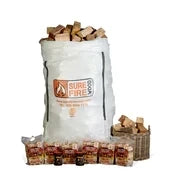
A neat crate or bag of kiln dried logs ready to burn.
What many don't realise is the amount of work, expertise and quality control that goes into producing premium firewood.
Kiln dried firewood doesn't become premium simply because it's heated.
Producing consistently dry, high-quality firewood requires careful timber selection, modern processing equipment, controlled kiln drying and rigorous quality checks before the logs ever reach a customer's home.
At Surefire Wood, we've been producing premium kiln dried firewood for decades. Today we're proud to be Ireland's leading producer and one of Europe's largest producers of kiln dried firewood, supplying homeowners, retailers, hospitality businesses and commercial customers throughout Ireland and the United Kingdom.
This guide explains how premium kiln dried firewood is produced and why every stage of the process matters.
Step 1 – Selecting the Right Timber
Producing premium firewood starts long before a log enters the kiln.
It starts with selecting suitable timber.
Different tree species behave differently.
Some produce outstanding heat.
Some burn quickly.
Others are better suited to kindling or short fires.
At Surefire Wood our premium range focuses on carefully selected species including:
- Ash
- Oak
- Beech
- Spruce
- Larch
These species consistently provide the heat output, burn time and reliability our customers expect.
Selecting the right timber at the beginning helps ensure better performance at the end.
Step 2 – Cutting and Processing
Once suitable timber has been selected it is processed into firewood.
Consistency matters.
Logs that are too large are difficult to light.
Logs that are too small burn too quickly.
Correct log length and consistent splitting help ensure:
- Easier lighting
- Better airflow
- Faster drying
- More consistent burning
Every stage is designed to prepare the timber for efficient kiln drying.
Step 3 – Kiln Drying
This is where the transformation happens.
Fresh timber naturally contains large amounts of water.
Depending on the species it may contain more than 50% moisture.
That moisture must be removed before the wood burns efficiently.
Inside the kiln the timber is dried using carefully controlled:
- Temperature
- Airflow
- Drying time
Different species require different drying profiles.
Dense hardwoods such as Oak dry differently from Spruce or Larch.
The objective isn't simply drying wood quickly.
It's achieving consistent moisture content throughout every load.
Step 4 – Moisture Testing
One of the biggest misconceptions about firewood is that producers simply estimate whether logs are dry.
Professional producers don't guess.
Moisture content is checked using moisture meters to verify that the firewood meets recognised Ready to Burn standards.
Testing is carried out on freshly split logs because the centre provides the most accurate indication of moisture.
This helps ensure customers receive firewood that lights easily and burns efficiently.
Step 5 – Storage
Even after kiln drying, storage remains important.
Firewood naturally absorbs moisture from the surrounding environment.
That's why premium firewood should be stored:
- Under cover
- Raised off the ground
- In well-ventilated conditions
Protecting the logs after drying helps preserve the low moisture content achieved during production.
Step 6 – Delivery
The final stage is getting the firewood safely to the customer.
Careful handling during storage and transport helps ensure the logs arrive in excellent condition and are ready to burn immediately.
When customers receive premium kiln dried firewood they should be able to unload it, store it correctly and begin using it straight away.
Why Kiln Drying Makes Such a Difference
Kiln drying removes excess moisture that would otherwise reduce stove performance.
The benefits include:
- Easier lighting
- Greater heat output
- Cleaner combustion
- Less smoke
- Reduced creosote
- Cleaner stove glass
- Better fuel efficiency
The result is a fire that burns hotter, cleaner and more consistently.
Ready to Burn Certification
Independent certification provides additional confidence.
Customers purchasing firewood in Ireland should look for:
WFQA Ready to Burn
Customers in the United Kingdom should look for:
Woodsure Ready to Burn
These recognised certification schemes verify that firewood contains less than 20% moisture, helping customers choose fuel that's ready to use immediately.
What Makes Premium Firewood Different?
Premium firewood isn't defined by one factor.
It's the result of many small decisions made throughout production.
Quality timber.
Consistent processing.
Careful kiln drying.
Moisture testing.
Correct storage.
Independent certification.
Every stage contributes to the finished product.
Common Myths
"Kiln dried firewood burns too quickly."
No.
Premium kiln dried firewood burns efficiently because less energy is wasted evaporating moisture.
Burn time is determined largely by the wood species and density.
"Seasoned firewood is exactly the same."
Properly seasoned firewood can perform well.
The difference is consistency.
Kiln drying provides much greater control over final moisture content.
"Any producer can make premium firewood."
Producing consistently high-quality firewood requires specialist equipment, experience and quality control throughout the production process.
Expert Insight – What We've Learned
Producing thousands of tonnes of kiln dried firewood every year teaches you that consistency matters just as much as moisture content.
Two loads of Ash may appear identical, but if one has been dried and handled correctly while the other hasn't, they can perform very differently in the stove.
That's why we focus on every stage of production rather than viewing kiln drying as a single step.
The objective isn't simply to produce dry logs.
It's to produce firewood customers can rely on every time they light their stove.
Frequently Asked Questions
How long does kiln drying take?
Drying times vary depending on the timber species, moisture content, log size and kiln conditions. The goal is to achieve consistent moisture levels rather than simply drying logs as quickly as possible.
Does kiln drying damage firewood?
No.
When managed correctly, kiln drying removes excess moisture while preserving the timber's natural burning characteristics.
Why is moisture testing important?
Moisture testing helps verify that firewood meets recognised Ready to Burn standards and will burn efficiently.
Is kiln dried firewood environmentally friendly?
Using properly dried firewood improves combustion efficiency, helping appliances burn more cleanly than burning wet or poorly seasoned timber.
Can kiln dried firewood absorb moisture again?
Yes.
That's why proper storage after delivery is so important.
Behind the Scenes at Surefire Wood
Producing premium kiln dried firewood isn't simply our business—it's our expertise.
Every year, thousands of tonnes of timber pass through our production facilities before reaching homes and businesses across Ireland and the UK. From selecting suitable species to monitoring moisture content and preparing orders for dispatch, every stage is designed to deliver consistent quality and dependable performance.
While many companies simply sell firewood, we produce it ourselves. That gives us complete oversight of the journey from timber to finished product and allows us to maintain the standards our customers expect.
Final Thoughts
When you light a premium kiln dried log, you're benefiting from far more than a drying process.
You're benefiting from careful timber selection, controlled production, moisture management, quality assurance and decades of experience.
At Surefire Wood, we believe great firewood starts long before it reaches your stove. By combining premium species such as Ash, Oak, Beech, Spruce and Larch with recognised WFQA Ready to Burn and Woodsure Ready to Burn certification, we help customers across Ireland and the UK enjoy cleaner fires, greater efficiency and dependable heat throughout the heating season.