
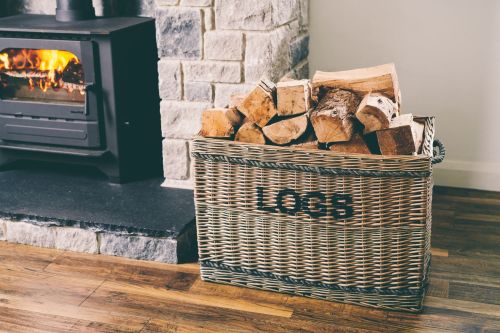
Can You Burn Softwood in a Wood-Burning Stove?
Yes. You can burn softwood in a wood-burning stove as long as it is properly dried or kiln dried.
In fact, kiln-dried softwood can be an excellent choice when you want strong, responsive heat from your fire.
There's a common misconception that hardwood is automatically better firewood simply because it's called "hardwood".
It isn't that simple.
Not all hardwoods are equally dense, and not all softwoods perform the same way.
Less-dense hardwoods such as Birch and Alder can have characteristics much closer to certain softwoods than to dense hardwoods such as Oak, Ash and Beech.
At Surefire Wood, we've been producing firewood since 1989. Our standard kiln-dried firewood predominantly contains locally sourced Larch and Spruce, while our Premium Hardwood predominantly contains Ash, Oak and Beech.
The important question isn't simply hardwood or softwood.
It's what type of heat do you want from your fire?
Why Is Softwood Good for a Wood-Burning Stove?
One of the biggest advantages of properly kiln-dried Larch and Spruce is how quickly they produce useful heat.
When you come into a cold room and light your stove, you don't want to wait around to feel the benefit.
You want to establish the fire, bring the stove up to temperature and start producing heat.
That's where quality kiln-dried softwood performs particularly well.
Our Premium Firewood is predominantly locally sourced Larch and Spruce and is professionally kiln dried to below 20% moisture content.
It provides strong, responsive heat, making it an excellent everyday choice for wood-burning stoves.
Instant Heat vs Sustained Heat
A better way to compare different types of firewood is to think about instant heat versus sustained heat.
Larch & Spruce — Instant, Responsive Heat
Properly kiln-dried Larch and Spruce are excellent when you want to establish a strong fire and feel the heat quickly.
They're particularly useful for:
-
Getting heat into a cold room quickly
-
Evening fires
-
Bringing a stove up to temperature
-
Homes where the stove is used for a few hours at a time
-
Producing strong, responsive heat when you need it
Oak, Ash & Beech — Sustained Heat
Dense hardwoods such as Oak, Ash and Beech are particularly useful when you want to maintain heat over an extended period.
Their greater density means there's more wood mass within a similar volume of logs, making them well suited to longer fires and sustained heat.
Our Premium Hardwood predominantly contains Ash, Oak and Beech and is an excellent choice when sustained heat is the priority.
Neither option is automatically better.
They provide different characteristics for different ways of using your stove.
Is Hardwood Always Better Than Softwood?
No.
This is one of the biggest misconceptions when buying firewood.
The words hardwood and softwood describe botanical groups of trees. They aren't quality ratings for firewood.
Consider these examples:
Oak is a hardwood.
Birch is a hardwood.
Alder is a hardwood.
Larch is a softwood.
It would be easy to assume that Oak, Birch and Alder must therefore all be superior firewood to Larch.
But that's not how it works.
One of the most important differences between individual species is density.
Dense hardwoods such as Oak, Ash and Beech are excellent when sustained heat is required.
Less-dense hardwoods such as Birch and Alder don't have the same density advantage.
Larch, meanwhile, is relatively dense for a softwood and provides excellent responsive heat when properly kiln dried.
We've compared the characteristics of different species in more detail in our guide to the best firewood for a wood-burning stove.
That's why buying firewood purely because someone has written "hardwood" on the bag doesn't tell you the full story.
Larch vs Birch Firewood
Birch is perfectly good firewood when properly dried.
But it's worth understanding what you're actually buying.
Birch is technically a hardwood, yet it's considerably less dense than hardwoods such as Oak, Ash and Beech.
It's popular because it provides good heat and an attractive flame.
Properly kiln-dried Larch also provides excellent heat and can offer burning performance comparable with Birch.
So don't automatically assume Birch is the better choice simply because it carries the hardwood label.
A better question is:
How dry is the timber, what species am I buying, where was it sourced and what am I getting for my money?
Larch vs Alder Firewood
Alder is another good example of why the hardwood label can be misleading.
Alder is botanically a hardwood.
However, it's considerably less dense than hardwoods such as Oak, Ash and Beech.
Properly kiln-dried Larch can provide excellent responsive heat and compares very favourably with less-dense hardwood species such as Alder.
Again, the word "hardwood" on its own doesn't tell you how good the firewood will be.
Why Larch Makes Excellent Firewood
Larch is one of the clearest examples of why softwood shouldn't be dismissed as inferior firewood.
Although botanically classified as a softwood, Larch is relatively dense for a softwood.
When properly kiln dried, it provides:
-
Excellent heat
-
Fast, responsive warmth
-
Reliable ignition
-
Strong flame
-
Excellent everyday stove performance
It's particularly useful when you want to light your stove and start feeling the heat quickly.
Larch forms an important part of our standard kiln-dried firewood range at Surefire Wood.
Is Spruce Good Firewood?
Yes.
Properly dried or kiln-dried Spruce is good firewood for a wood-burning stove.
It produces strong, responsive heat and works particularly well alongside Larch.
At Surefire Wood, Spruce is predominantly combined with Larch in our standard firewood mix, providing an excellent everyday fuel for households looking for responsive heat from their stove.
Does Softwood Give Less Heat Than Hardwood?
Not necessarily.
This is another area where the hardwood-versus-softwood argument becomes misleading.
When properly dried wood is compared by weight, the differences in energy content between many wood species aren't as dramatic as people often assume.
Density makes a major difference when comparing wood by volume.
A similar volume of dense Oak will generally contain more wood mass than the same volume of a less-dense species.
That's one reason dense hardwood is particularly good for sustained heat.
But it doesn't mean less-dense timber produces poor heat.
Far from it.
The responsive heat from kiln-dried Larch and Spruce can be exactly what you want when you're trying to get warmth into a cold room.
Moisture Content Matters More Than the Label
Whether you're buying hardwood or softwood, one thing matters enormously:
How dry is it?
Freshly cut timber contains a significant amount of water.
If you burn wood containing too much moisture, some of the fire's energy has to evaporate that water instead of producing useful heat.
Wet wood can therefore be harder to light and much less effective as a fuel.
That's why Surefire Wood professionally kiln dries its firewood to below 20% moisture content.
If you'd like to understand why moisture content makes such a difference, read our complete guide to kiln-dried firewood.
A properly kiln-dried Larch log can be a far better fuel than a wet or poorly seasoned hardwood log.
Softwood isn't the problem. Wet wood is.
Can You Use Larch, Spruce and Hardwood Together?
Yes.
Using different species can give you the advantages of both responsive and sustained heat.
Kiln-dried Larch and Spruce are excellent when you want instant, responsive heat.
Dense hardwoods such as Oak, Ash and Beech are useful when you want to maintain that heat over a longer period.
Think of it simply as:
Larch & Spruce → instant, responsive heat
Oak, Ash & Beech → sustained heat
Both have their place.
What Should You Look for When Buying Firewood?
Don't judge a bag of firewood purely by whether it says hardwood.
Instead, look at:
-
The actual species of timber
-
Moisture content
-
Density
-
Log size
-
Quantity supplied
-
Where the timber was sourced
-
Whether it has been properly dried or kiln dried
-
The type of heat you want
A bag of Birch or Alder doesn't automatically become superior firewood simply because those species are botanically hardwoods.
Likewise, quality kiln-dried Larch shouldn't be dismissed because it's technically a softwood.
Species, density and moisture content tell you far more than the hardwood or softwood label alone.
Frequently Asked Questions
Can you burn softwood in a wood-burning stove?
Yes.
You can burn softwood in a wood-burning stove as long as it is properly dried or kiln dried.
Kiln-dried Larch and Spruce can provide excellent, responsive heat.
Is softwood good for a wood-burning stove?
Yes.
Properly dried softwood can make excellent stove fuel.
Kiln-dried Larch and Spruce are particularly useful when you want to get your stove hot and start feeling useful heat quickly.
Does softwood give good heat?
Yes.
Properly kiln-dried Larch and Spruce provide excellent heat and are particularly good when you want responsive warmth from your stove.
This makes them an excellent choice for evening fires and situations where you want to get a cold room comfortable quickly.
Is hardwood always better than softwood?
No.
Hardwood and softwood are botanical classifications, not firewood quality ratings.
Dense hardwoods such as Oak, Ash and Beech are particularly good for sustained heat.
Less-dense hardwoods such as Birch and Alder don't have the same density advantage, while Larch is relatively dense for a softwood.
Is Larch good firewood?
Yes.
Larch is relatively dense for a softwood and provides excellent heat when properly kiln dried.
It's particularly useful when you want strong, responsive heat.
Is Spruce good for a wood-burning stove?
Yes.
Properly dried or kiln-dried Spruce is good firewood for a wood-burning stove.
It produces strong, responsive heat and works particularly well alongside Larch.
Is Birch better than Larch?
Not automatically.
Birch is a less-dense hardwood, while Larch is a relatively dense softwood.
Both can make good firewood when properly dried.
The better choice depends on moisture content, value and the type of heat you want rather than simply whether one is labelled hardwood.
Is Alder better than softwood?
Not simply because it's a hardwood.
Alder is a relatively low-density hardwood, so the hardwood label alone doesn't mean it will outperform quality kiln-dried Larch.
The actual species, moisture content and density matter more than the label.
Which gives longer-lasting heat: Larch or Oak?
Dense hardwoods such as Oak are generally the better choice when sustained heat over an extended period is the priority.
Larch is particularly good when you want strong, responsive heat.
They're different fuels for different requirements.
Can I burn softwood and hardwood together?
Yes.
Kiln-dried Larch and Spruce can provide instant, responsive heat, while dense hardwoods such as Oak, Ash and Beech can provide more sustained heat.
Using both gives you the advantages of each.
Does softwood cause chimney problems?
No, not simply because it's softwood.
The important thing is to burn properly dried or kiln-dried firewood and keep your stove, chimney and flue properly maintained.
Wet wood and poor combustion are far more important issues than whether a tree is botanically classified as hardwood or softwood.
What moisture content should firewood have?
Surefire Wood professionally kiln dries its firewood to below 20% moisture content.
Lower moisture means less of the fire's energy is being used to evaporate water and more can contribute to useful heat.
Is kiln-dried softwood better than wet hardwood?
Yes.
If the choice is between properly kiln-dried softwood and wet hardwood, choose the dry firewood.
A hardwood label doesn't compensate for excessive moisture.
What's Better: Hardwood or Softwood?
Forget the label for a moment.
Ask what you actually want from your fire.
If you want strong, responsive heat that gets your stove and room warm quickly, kiln-dried Larch and Spruce are an excellent choice.
If your priority is sustained heat over a longer period, dense hardwoods such as Oak, Ash and Beech have the advantage.
And if you're comparing Larch with less-dense hardwoods such as Birch or Alder, don't assume the hardwood option is automatically better.
Look at the species, density, moisture content and value — not just the label.
Buy Kiln-Dried Firewood from Surefire Wood
Surefire Wood is a family-run firewood producer based in County Fermanagh, Northern Ireland.
We've been producing firewood since 1989, giving us more than 35 years of experience processing and kiln drying timber.
Our Premium Firewood predominantly contains locally sourced Larch and Spruce and is an excellent choice for strong, responsive heat.
For customers looking for sustained heat from denser timber, our Premium Hardwood predominantly contains Ash, Oak and Beech.
Both are professionally kiln dried.
The important question isn't simply hardwood or softwood.
It's which species, how dry is it, and what type of heat do you want?
Shop our complete kiln-dried firewood range and choose the logs that suit the way you heat your home.